Thursday, February 23, 2012

Semester 2 Blog 3: Starfish Blog

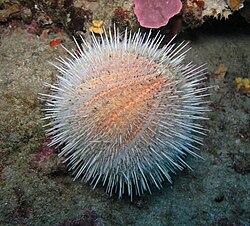
   Starfish possess 5-rayed radial symmetry. In some cases, the symmetry may be bilateral.  Echinoderms possess a body with tissue and organ cell layers.  The body cavity is described as a true coelom.  Echinodermata do not posses a head and their bodies can be highly variable.  The circulatory system is open and is poorly defined.  Their water vascular system hydraulically operates their tube.  The nervous system consists of a circum-oesophageal ring.  Starfish do not have excretory organs.  Reproduction typically occurs sexually and gonochoristic.  Starfish feed on small particles and animals that may reside in the water. 

Crinoidea
Ophiocistiodea


Astroidea
Echinoludea
a
Holothuoidea
 

Wednesday, February 8, 2012

Genome Chapter 16: Memory

   The chapter opens by comparing the genome to a book.  A book that, given some reading and skill, can be used to construct a complete human body.  Ridley goes on to explain the supposed difference between the coded instinct and the concept of learning and memory.  Ridley acknowledges the age old distinction that animals operate on instinct alone and that humans learn everything.  However, Ridley states that many people take for granted that many of the things that humans do are operated based on the instinct coded into our genes.  Ridley additionally exemplifies learning in animals such as eagles, bees, and sea slugs.  The idea of learning and memory is also coded by genes.  Learning and memory provide the animal with the flexibility required to adapt to specific situations.  Ridley uses the example of language:  A hard-coded genetic language would not be flexible enough to efficiently describe a computer.  Learned language allows humans to effectively communicate ideas within the span of a single word. Going on to describe Eric Kandel's experiments with sea slugs, Ridley expands on the three types of learning: habituation, sensitization, and associative learning. 

   Moving into the technicalities, Ridley introduces cyclic AMP moleculres, CREB proteins, and CRE genes that are located on Chromosome 16.  These molecules are responsible for the process of learning and memory storage.  Ridley identifies various parts of the brain and how they are integrated into the process of learning and memory storage.  Ridley states that the entire process of learning may possibly be based on the tightening and loosening of specific connections between nerve cells.  Ridley stresses the importance of integrins in enabling the process of learning. Additionally, Ridley briefly discusses the effects of an overabundance or lack of CREB protein production. 

Tuesday, February 7, 2012

Double Fertilization

The process of double fertilization is an integral one to all of the flowering plants on Earth.  Double fertilization is a process by which two sperm sells are transported by pollen to the ovaries of an angiosperm.  One sperm fertilizes the egg to form a zygote.  The other sperm fuses with a polar nuclei to form a tripolar endosperm nucleus.  The endosperm is responsible for providing nutrients to the developing zygote and allows the seed to undergo the initial stages of germination when specific conditions are met. 

The evolution of the double fertilization process is interesting because it involves a gene that inhibits the expression of another gene.  Originally, a specific gene would limit the amount of sperm cells in any given pollen to one.  However, by inhibiting this gene, angiosperms are able to produce two sperm cells in a pollen.  This mechanism allows the process of double fertilization to occur and is a defining characteristic of all flower plants on Earth today.

Saturday, February 4, 2012

Extra Credit Blog

What topics really confused you?

Prokaryotes/Fungi, Virus types, Sex Linked Traits, Functional Groups

What topics do you feel very clear on?

Cellular Respiration/Photosynthesis, Enzymes, Succession, Imprinting, Biomes,


What lab/activity was your favorite? Why?

I thought that the Toothpickase lab was helpful in understanding how enzymes work and how they are limited by things like environmental conditions and substrate concentrations.

What lab/activity was your least favorite? Why?

    I felt that the transpiration lab was a bit confusing at first.  When my group was able to complete the set-up, I felt that we did not have enough time left to collect enough data. 

If you could change something about the class to make it better, for instance the type of homework (not the amount) what would it be and why?

I think that the AP class would benefit from more exposure to AP Exam style Multiple Choice questions that relate to our unit of study.  While the study guides and online quizzes help reinforce understanding, the multiple choice tests sometimes seem like totally different beasts.  I think that packets or links to multiple choice AP style questions pertaining to the unit of study would help a lot.  


Thursday, February 2, 2012

Genome Chapter 1: Life Summary

   The chapter begins by attempting to relate awe that Matt Ridley feels when he thinks of the odds that placed him at the precise moment, time, and species to allow him to understand the discoveries made by scientists in mapping the human genome.  Ridley goes on to explain life as beginning as a single word.  The development of a replicating recipe is ultimately the development of life.  The three letter words come together to create and regulate orderly systems called animals.  Ridley goes on to cite Aristotle's original idea of information theory and then transitions to the scientists that were integral to genetic discoveries: Francis Crick, James Watson, etc...  Ridley describes Oswald Avery's work in experimenting with bacterial transformations in an attempt to identify the true function of DNA and its bases.  Ridley asserts that like a well designed machine, "life, too, is digital information written in DNA" (16). The chapter moves on to identify the 120 letter long gene on Chromosome 1 that codes for the production of a type of RNA that comes together to form protein assembling ribosomes.  Citing evidence such as its ability to replicate itself, Ridley introduces the theory that RNA developed before the rise of Proteins and DNA.  DNA and proteins arose to facilitate the replication of the fragile RNA molecules.  A theory is also introduced that supposes that bacteria were not at the origin of life.  Rather, protozoan like creatures were.  Ridley concludes the chapter by noting the universal quality that the language of DNA has across all organisms.  The fact that all genetic code is universal across all organisms means that we were all descended from one point of creation.

Sunday, January 22, 2012

Cell Haikus


Golgi
It is the Golgi
Apparatus that does all
Sorting and Secretion

Nucleus
At the cell’s center
Packed with genes and DNA
Lies the nucleus

Membrane
Protection throughout
The plasma membrane is strong
Allows some molecules

Major Plant Divisions


Bryophytes
                        These plants are composed of liverworts, hornworts, and mosses.  Bryophyte plants have dominant gametophyte generations are larger and longer living than their sporophyte generations.  In fact, their sporophyte generations are dependent on the gametophytes for nutrition and shelter.  Bryophytes are nonvascular plants so they are unable to grow fairly tall and typically  will be shorter flat plants.  

 
Seedless Vascular Plants
                                    These plants have developed tubes inside them that allow them to transport minerals, nutrients, and water to different areas of the plant.  Made out of xylem and phloem, these plants are more able to stand upright and grow taller to be more competitive in gathering sunlight and nutrients in their environment.  These plants demonstrate a steady shift from dominant gametophyte generations to longer sporophyte generations that rely less on the gametophytes.


Gymnosperms
                        Gymnosperms include plants like conifers, pines, etc.. Their seeds are considered naked seeds and lack an enclosed ovary.  As such they are typically called naked seed plants.  In conifers, the seeds are grown on cones.  Gymnosperms have very small and very short gametophyte generations.  The sporophyte is now the largest and more noticeable part of the plant.


Angiosperms
                        The angiosperms are considered the flowering and fruiting plants.  These plants have enclosed ovaries that allow them to protect their embryos.  Angiosperms are divided into monocots and dicots.  Angiosperms utilize flowers to attract insects and animals to aid in the process of pollination and fertilization.  Angiosperms also grow fruits to protect their seeds.  Fruits have also evolved to aid the spread of species by means of both animal and environmental aids.